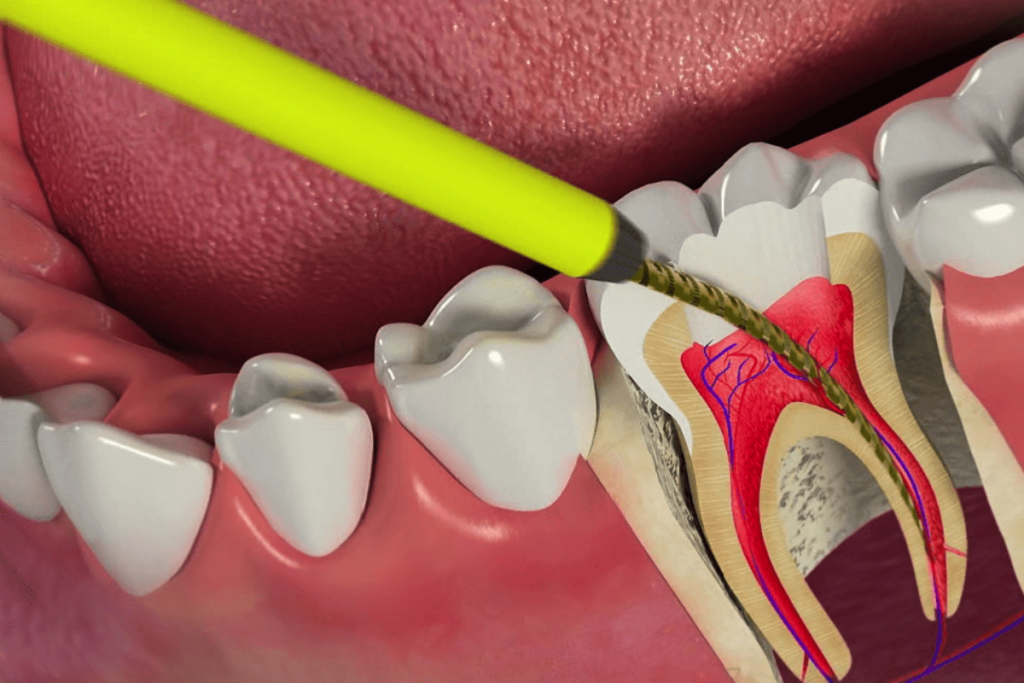
Endodontics is a branch of dentistry that deals with the internal tissues of the tooth, their pathologies, and their treatment. When these tissues or the tissues surrounding the tooth root are damaged due to decay or trauma, endodontic treatment can largely save the tooth. The dental pulp, commonly known as the tooth nerve, is actually a specialized tissue composed of arteries, blood vessels, nerve endings, and connective tissue cells. During the developmental stage, this tissue is responsible for forming the calcified support structure of the tooth (dentin). In adults, once development is complete, the pulp becomes thinner and plays a role in sensitivity to hot, cold, and decay, as well as in the repair and hydration of dentin.Pathologies such as tooth decay can disrupt pulp health, leading to progressive demineralization and destruction of the hard tissues of the tooth due to the action of microorganisms. If this issue is not treated promptly, the cavity caused by decay expands and deepens until it reaches the pulp. At this stage, endodontic treatment (root canal therapy), a conservative approach that helps avoid tooth extraction, becomes necessary. In general, endodontics aims to preserve teeth affected by pulp infection or necrosis, which can cause pain and inflammation in surrounding tissues.
When Is Endodontic Treatment Necessary?
Endodontic treatment is required when the pulp of the tooth becomes inflamed. Pulp inflammation can result from various causes, the primary one being infection caused by bacteria in the mouth. Since tooth enamel is resistant to bacteria, they cannot normally reach the pulp. However, if the enamel is damaged, bacteria can penetrate and reach the pulp. This is also the case with deep cavities and tooth fractures. Once bacteria reach the pulp, they cause inflammation followed by pulp necrosis. When the pulp dies, bacteria can spread to the surrounding bone, leading to infection (abscess).How Is Endodontic Treatment Performed?
The goal of endodontic (root canal) treatment is to completely remove the pulp from both the crown and roots of the tooth using advanced specialized instruments, and then replace the removed tissue with appropriate filling materials after proper cleaning. In the past, predicting the exact outcome of root canal treatment was challenging and required numerous radiographic tests along with the clinician’s precision. Today, modern technology has introduced tools that make the procedure more predictable, simpler, and safer.During root canal treatment, all pulp tissue is removed, the canals are thoroughly cleaned with special solutions, and then filled three-dimensionally along their entire length. The next step is restoring the tooth. Depending on the extent of tissue loss caused by the lesion, a filling, inlay, or prosthetic crown may be used to restore function. This allows patients to regain their natural smile, maintain chewing function, and avoid more invasive or costly treatments. When properly performed, endodontic treatment can allow the treated tooth to last a lifetime, just like natural teeth.Is Root Canal Treatment Painful?
Pain is effectively controlled during root canal treatment thanks to local anesthesia. After the procedure, there may be mild discomfort, but this can easily be managed with common analgesics. In rare cases, especially in infected teeth, bacteria may spread to the surrounding bone, causing a painful abscess with swelling. However, the occurrence of such complications does not necessarily affect the success of the ongoing treatment.How Successful Is Root Canal Treatment?
The success rate of root canal treatment is over 95%. In some cases (such as abnormal root anatomy, root fractures, or cracks in dentin), the tooth may continue to cause discomfort. In such situations, retreatment or endodontic surgery may be required.Post-Treatment Care
In most cases, patients do not experience pain after root canal treatment. If minor discomfort occurs, pain relievers recommended by the dentist can help. Any discomfort usually subsides within a few days. It is important to avoid eating or drinking while the local anesthesia is still effective to prevent accidental injury from improper biting or extreme temperatures. A follow-up X-ray may be required a few months after treatment to ensure that the procedure was successful.