Orthodontics is a branch of dentistry concerned with the diagnosis, prevention, and treatment of malocclusions that occur when there is an improper relationship between the upper (maxillary) and lower (mandibular) dental arches. Malocclusions are caused by abnormalities in the position or development of the teeth (misalignment) as well as structural changes in the maxillary and mandibular bones. The aim of orthodontics is to treat and correct these anomalies, which can have significant functional and aesthetic consequences, including disorders in the chewing muscles and jaw joints. Modern orthodontics is not limited to aligning teeth; it also supports achieving an optimal balance between chewing efficiency, dental health, smile aesthetics, and overall patient well-being.
Stages of Orthodontic Treatment
Orthodontic treatment can be performed during three different stages of development:
- Pre-adolescent stage: Young orthodontic patients in this stage still have primary (baby) teeth, and their jaw and facial structures are still developing. Orthodontic treatment at this stage aims to correct structural imbalances to support the harmonious development of dental arches. Harmful habits such as thumb sucking, pacifier use, nail biting, swallowing disorders, or mouth breathing, as well as mismatched upper and lower jaw relationships (crossbite, open bite), can be corrected at this stage.
- Adolescent stage: This stage corresponds to the peak of the pubertal growth spurt. Orthodontic treatment at this stage aims to achieve proper functional balance along with optimal smile aesthetics. A healthy bite is planned in accordance with the patient’s oral health and aesthetic expectations. In cases of severe crowding or significant skeletal discrepancies, tooth extraction or surgically assisted treatments may be required.
- Adult stage: At this stage, orthodontic treatment aims to achieve a balanced and stable bite while improving smile aesthetics. Bone loss supporting the teeth or tooth loss due to periodontal disease may cause tooth displacement, requiring corrective orthodontic intervention. In adults with significant skeletal imbalances, orthodontic treatment may be combined with microsurgical or surgical procedures.
Orthodontic Treatment Methods
In this section, we answer the question of what orthodontic treatment methods are available. The choice of treatment depends on the condition of the teeth and the patient’s developmental stage. Various types of fixed and removable appliances, as well as braces applied inside or outside the mouth, can be used depending on the type of problem. Common orthodontic treatment methods include:
Braces
Braces are wire-based devices placed directly on the teeth by orthodontists to correct misalignment. They remain the most commonly used method in orthodontic treatment. There is no strict age limit for wearing braces; however, it is generally recommended to wait until most or all permanent teeth have erupted. Some alignment issues may resolve naturally during this phase, so braces are not always necessary. Depending on the patient’s condition and preference, different types of braces can be used:
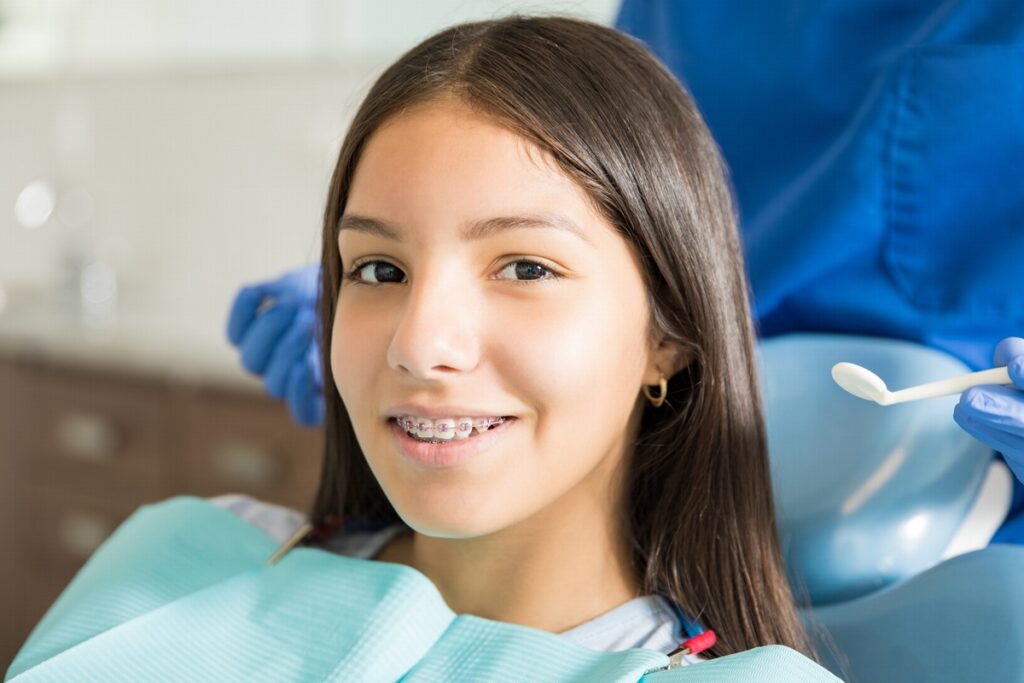
- Metal braces: Also known as brackets, metal braces are the most popular orthodontic treatment method, especially among adolescents and younger patients. They are highly durable compared to other options. Orthodontists use colored or clear elastics to secure the wires between brackets.
- Clear aligners: Also known as invisible orthodontics or Invisalign, these aligners are nearly invisible in the mouth and offer a more aesthetic treatment process. They can be easily removed, making oral hygiene and maintenance easier. They are especially popular among adults, though there is no strict age limit. Clear aligners are custom-designed for each patient using computer technology and are ideal for athletes, models, actors, musicians, and professionals.
- Lingual braces: Also known as invisible braces, these are attached to the inner surface of the teeth, making them completely hidden from view.
- Porcelain braces: These are less noticeable from the outside and are preferred by patients with aesthetic concerns. However, they are more fragile and require extra care, making them less suitable for children.
For fixed appliances like metal braces, maintaining good oral hygiene is generally sufficient. However, porcelain braces require extra care due to their delicate structure. Clear aligners have the least negative impact on daily and social life.
At What Age Can Braces Be Applied?
Braces can be applied at any age. The main difference between children and adults is that children still have space in their mouths for tooth development, whereas adults do not. Starting treatment early in cases such as mandibular deficiency can make orthodontic treatment more effective, as it is still possible to guide bone growth at this stage. Adults with skeletal malocclusions may have less improvement potential compared to growing children. However, dental crowding can be successfully corrected in children, adolescents, and adults with similar success rates.
How Long Does Orthodontic Treatment Take?
The duration of orthodontic treatment varies significantly from patient to patient. Each case is unique. Factors such as the patient’s age, presence of other oral or systemic conditions, tissue response to treatment, and level of oral hygiene all influence treatment duration.
Is Orthodontic Treatment Painful?
Orthodontic treatment today is generally painless. This is mainly due to advancements in orthodontic techniques and materials used in braces. Orthodontists typically apply very light and consistent forces to achieve maximum tooth movement with minimal discomfort. The most common sensation experienced by patients is a feeling of pressure on one or more teeth. Other discomforts may arise from the presence of orthodontic appliances in the mouth.
Braces Prices
The cost of braces varies depending on the type of braces chosen, the orthodontist’s experience, the condition of the teeth, the clinic, and many other factors. For example, the price of clear aligners or lingual braces differs significantly from that of traditional braces. Additionally, orthodontic treatment costs may fluctuate due to changes in material prices used during treatment.