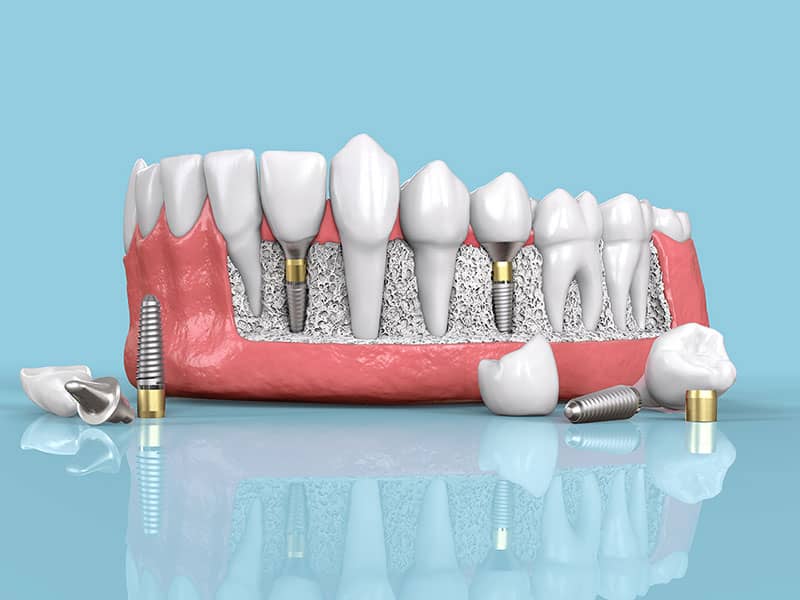
Implantology, or dental implantology, is a branch of dentistry that aims to restore missing teeth by placing artificial titanium roots. Essentially, implantology is a rehabilitation procedure for individuals who have lost their natural teeth. Artificial teeth are designed to replace missing natural teeth, both aesthetically and functionally in terms of chewing. Modern dental implantology techniques allow for permanent chewing rehabilitation and eliminate the difficulties associated with removable dentures, providing an aesthetic result comparable to natural teeth.
Why Are Implants Performed?
Implant treatment prevents bone loss. When a tooth is extracted, bone tissue loss begins in that area. This is an undesirable physiological loss. Implant application is a treatment that prevents bone loss. Implant treatment is the only reasonable solution to fully restore the functionality of the teeth and their supporting structures. It also restores chewing function while providing a natural appearance.How Is an Implant Performed?
The procedure begins with a consultation with the dentist. After the consultation, additional radiological examinations are often required to accurately assess the patient’s bone condition. Following this initial stage, the treatment phase begins. The procedure consists of placing the dental implant. This creates the foundation that will support the artificial tooth directly within the patient’s bone. After the implant is placed, the gum tissue that was opened is closed. Finally, to complete the treatment process, a temporary prosthesis is placed over the implant during the healing period. From this point, a waiting period of 3 to 6 months is required to allow proper tissue healing and ensure perfect osseointegration of the implant with the patient’s bone. After the healing period, the process continues with the placement of the implant-supported prosthesis, technically referred to as a fixed dental prosthesis. At this stage, the dentist places an abutment onto the integrated implant and permanently fixes the dental prosthesis.Advantages of Implant Treatment
Implants replace missing teeth and provide strong support for the required prostheses through an artificial tooth root. Unlike bridge treatments, this procedure closes gaps without the need to damage healthy adjacent teeth. Since implants transmit chewing forces directly to the jaw, they significantly reduce bone loss in toothless areas.Is Implant Treatment Painful?
Implant placement is not a painful procedure, as local anesthesia is administered to minimize any discomfort. In addition, the doctor will prescribe the necessary medications to effectively control any postoperative pain following the surgical procedure.Can Implants Be Performed If There Is Not Enough Bone?
An adequate amount of bone is required to ensure implant stability. If the bone is insufficient, the implant cannot achieve osseointegration (fusion with the bone), which may lead to implant failure. However, this issue can be resolved. The dentist may use specially designed biocompatible materials to support the development and accumulation of new bone tissue.Post-Implant Care
In the days immediately following surgery, attention should be paid to diet. Very hot foods should be avoided, as they may irritate gum tissues. Additionally, very small foods (such as rice) or easily crumbling foods should not be consumed, as they may get trapped between teeth. It is also advisable to avoid smoking for several days after the procedure. In fact, smoking is a major irritant for oral tissues and can even be a contraindication for implant treatment. By strictly following the dentist’s instructions, the risk of peri-implantitis—which can lead to implant loss—can be eliminated. Like natural teeth, implants also require regular care and check-ups. Patients should use the toothbrush, toothpaste, and dental floss recommended by their dentist and visit the dentist at least twice a year.Is There an Age Limit for Implant Treatment?
Implant treatment is generally applied to patients aged 18 and over. Any contraindication to implant placement is mainly related to the patient’s oral condition and overall health. Conditions such as diabetes or the use of certain medications may affect the success of the implant procedure.Implant Treatment Prices
Implant prices may vary depending on the number of implants required and the type of implant chosen. Therefore, if you are considering implant treatment, it is essential to consult a specialist to obtain accurate pricing information. You can contact us for detailed information about dental implant costs.